You’re navigating the shifts of perimenopause, menopause, or perhaps you’ve started Hormone Replacement Therapy (HRT) to regain your spark. You’re doing the work—managing your diet, tracking your moods, and following your medical protocols.
But even with treatment, do you still feel “heavy”? Are you struggling with stubborn bloating, brain fog, or midday fatigue that won’t budge?
There is a critical physiological connection between your endocrine system and your body’s fluid-transport system that most wellness plans completely overlook.
The Internal Adjustment: Your Body Under Pressure
During menopause or while on HRT, your body is undergoing a major internal recalibration. As hormone levels fluctuate or are introduced through therapy, your liver and kidneys aren’t the only players on the field.
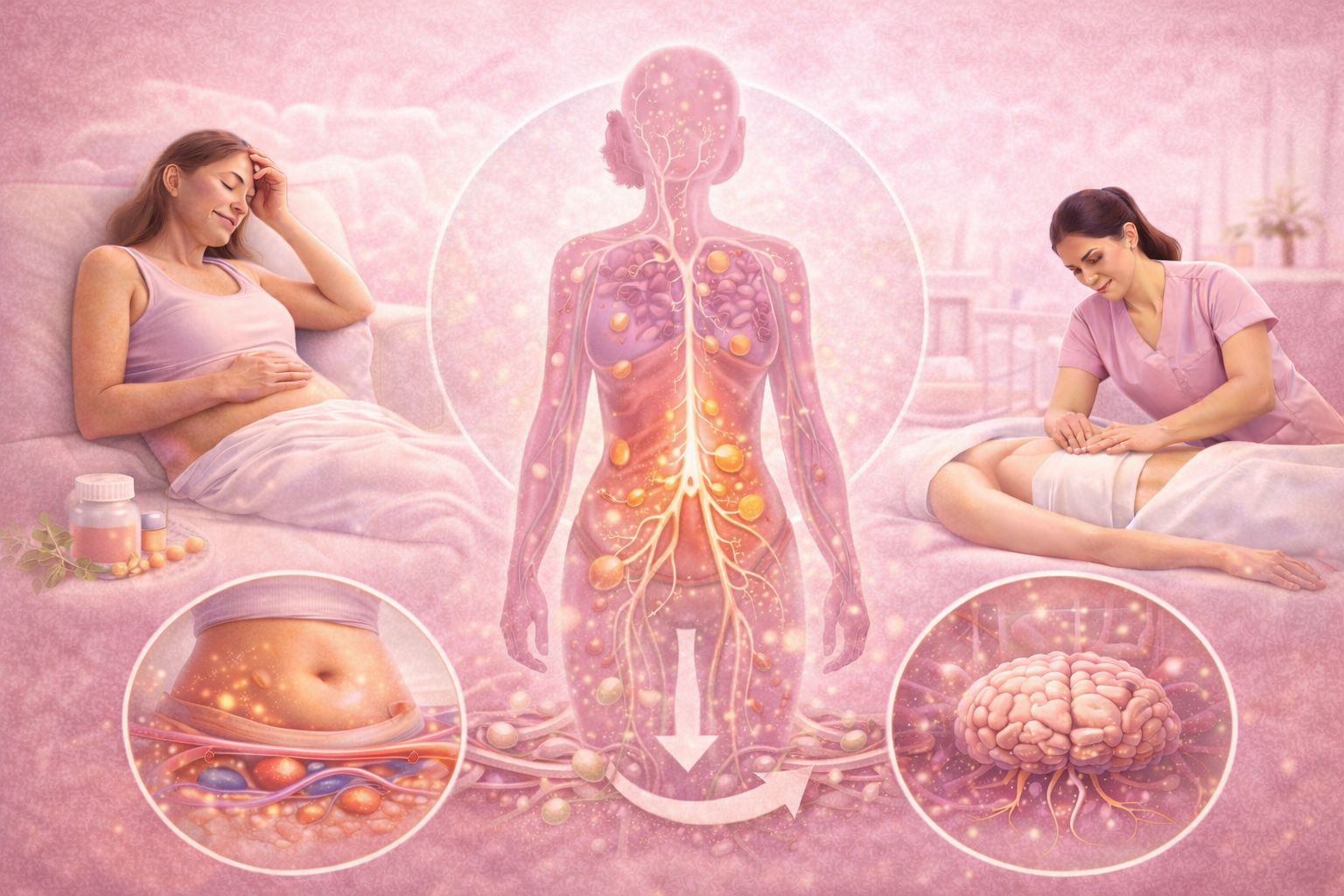
Your lymphatic system plays a critical role in maintaining interstitial fluid balance and immune regulation during hormonal transitions—especially when inflammation and fluid shifts are part of the picture.
The “Congestion” Crisis: When Fluid Shifts Outpace Flow
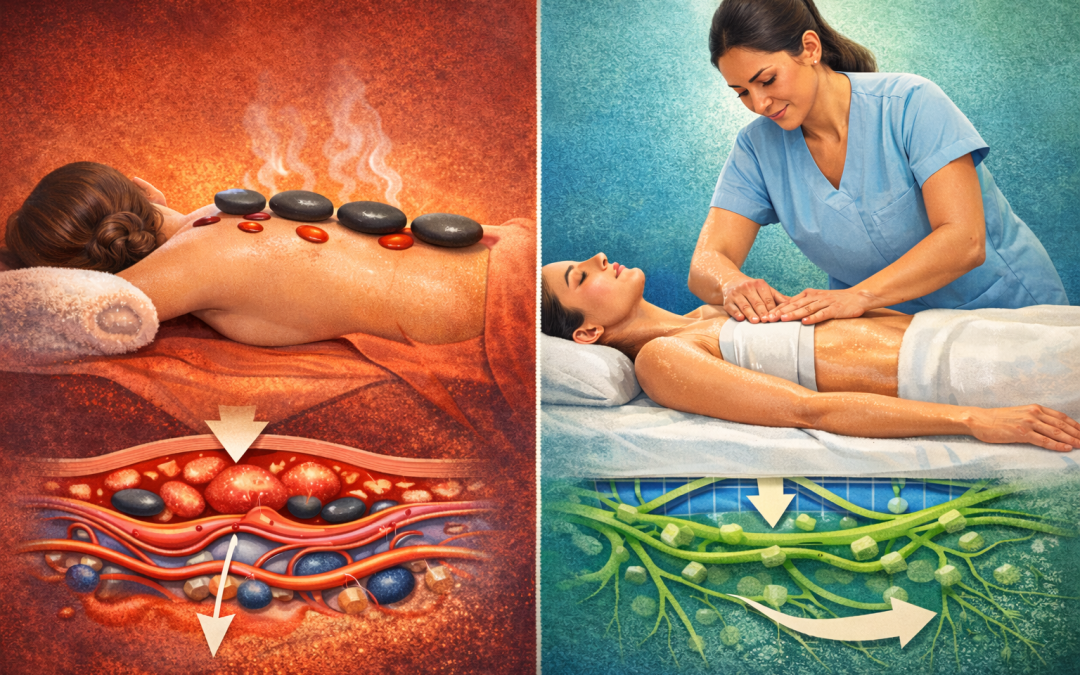
Think of your lymphatic system as the drainage network for your tissues. During hormonal transitions, vascular and inflammatory changes can increase tissue fluid load—while lymphatic transport may not always keep pace.
If lymphatic transport slows or becomes insufficient relative to fluid load, your body may accumulate interstitial fluid and inflammatory mediators. According to clinical education from the Cleveland Clinic, impaired lymphatic function can contribute to fluid retention and inflammatory congestion.
When drainage is sluggish, symptoms can show up—even when your treatment plan is solid:
- Persistent Bloating: Interstitial fluid can accumulate when lymphatic transport capacity is reduced relative to tissue fluid load.
- Chronic Fatigue: Increased inflammatory signaling and tissue congestion can contribute to a sluggish, “heavy” feeling.
- Mood Changes: Physical discomfort, poor sleep, and inflammation may affect emotional regulation and perceived wellbeing.
The Synergy: How Manual Lymphatic Drainage (MLD) Can Support This Phase
Manual Lymphatic Drainage isn’t just a “relaxing rub.” It’s a precise, light-pressure technique designed to stimulate superficial lymphatic vessels and enhance interstitial fluid movement.
- Fluid Balance Support: MLD supports lymphatic circulation and may help reduce tissue congestion during periods of fluid shifting.
- Reduced “Background Noise”: By easing swelling and inflammation, many clients report feeling lighter and more comfortable as their body adapts.
- Nervous System Regulation: Emerging research suggests MLD may support parasympathetic activation—promoting a calming “rest and digest” state that can be helpful during hormonal stress. Learn more via the Journal of Clinical Medicine.
The Carolina Pintos Therapy Advantage
At Carolina Pintos Therapy, we treat the woman—not just the symptom. Hormonal health is a complex puzzle, and fluid balance is often one of the missing pieces.
As a Physical Therapist trained in Brazil—a global leader in advanced lymphatic protocols—Carolina Pintos integrates clinical science with a whole-body understanding of women’s health. We don’t just move fluid; we support your body’s ability to find its new equilibrium.
Our patients frequently report:
- A feeling of “lightness” and noticeable reduction in abdominal bloating.
- Improved sleep quality through nervous system downshifting.
- Clearer mental focus and more stable day-to-day emotional balance.
Take Control of Your Transition in Houston
Hormonal changes shouldn’t feel like a battle against your own body. Whether you’re navigating menopause naturally or through HRT, lymphatic support can be the key to unlocking true comfort and balance.
Ready to feel like yourself again? Carolina Pintos Therapy provides expert lymphatic drainage across two Houston clinic locations. For ultimate convenience, we also offer mobile in-home sessions—bringing our specialized Brazilian expertise to your sanctuary.
References
- Cleveland Clinic: Lymphatic System: Function, Conditions & Anatomy
- Journal of Clinical Medicine
- Endocrine Society / Hormones & Fluid Balance
This writing is the original and exclusive property of Carolina Pintos and is protected under copyright law. Unauthorized use of the same without the express consent of Carolina Pintos will be subject to prosecution under applicable laws.