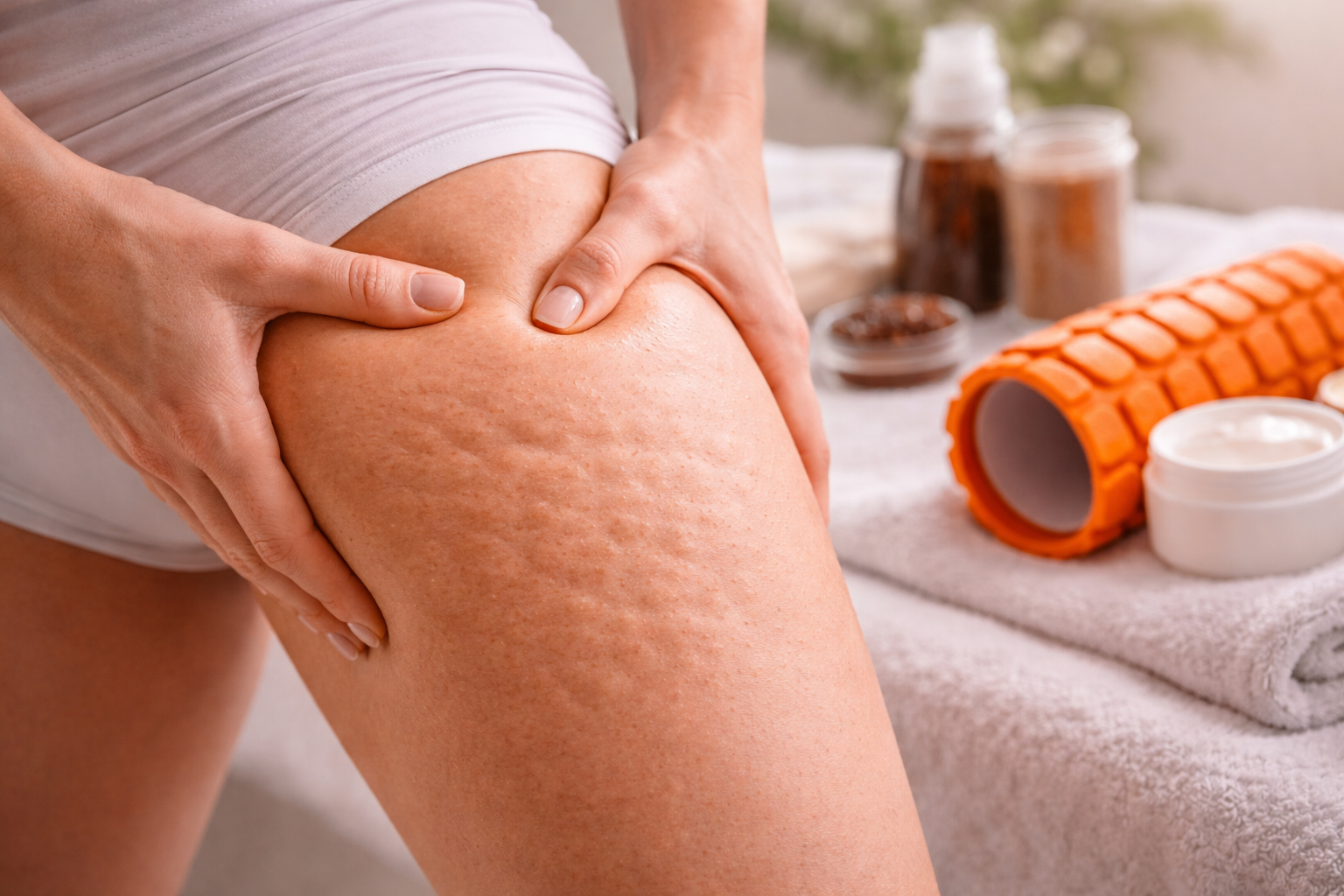
Dry Brushing. Retinol. Coffee Scrubs. Foam Rolling.
None of these are useless. They all have their place.
But if you have tried them expecting a real change in cellulite, you have probably already noticed the limitation.
They work at the surface. Cellulite does not.
At a certain point, it becomes less about what you are doing wrong and more about understanding what is actually happening under the skin.
What Cellulite Actually Is
Cellulite is not simply a fat issue. It is related to how the skin, connective tissue, and underlying fat interact.
Beneath the skin, fibrous connective bands, often referred to as septae, anchor the skin to deeper layers. In many women, these bands are oriented in a way that allows fat lobules to push upward while the bands pull downward.
Over time, factors like hormonal changes, fluid retention, circulation, and tissue quality can influence how this structure behaves. The result is the uneven, dimpled appearance commonly associated with cellulite.
This is why cellulite can be present regardless of weight or fitness level. Lean, active individuals can still have it.
It is not just about fat. It is about structure and tissue behavior.
Why Surface-Level Treatments Fall Short
Topical products and tools such as brushes or scrubs mainly affect the outermost layer of the skin. They may temporarily improve texture or hydration, but they do not significantly influence the deeper structural components involved in cellulite.
That does not make them ineffective. It just means they are limited in what they can realistically change.
When the goal is to improve the appearance of cellulite, the focus usually needs to shift toward the deeper tissue layers.
A Multi-Factor Approach to Cellulite
Because cellulite is influenced by more than one factor, approaches that focus on a single method tend to have limited results.
At Carolina Pintos Therapy, treatments are structured to address several components at once, including circulation, tissue mobility, fluid balance, and skin quality.
Depending on the individual, this may include a combination of techniques such as:
- Manual techniques: used to stimulate circulation and address areas of tissue density
- Vacuum Therapy: applied to gently lift the tissue and support blood flow
- Ultrasound Cavitation: used as part of body contouring protocols
- Radiofrequency (RF): used to support collagen production and skin tightening
- Wood Therapy: used to assist with tissue mobilization and contouring
- VelaShape III: a multi-modality device combining infrared, radiofrequency, and mechanical stimulation for cellulite treatment
Each of these targets a different aspect of the same issue. The goal is not to rely on one technique, but to support the tissue from multiple angles.
What to Expect Over Time
Changes in the appearance of cellulite tend to happen gradually. The body responds over time, especially when collagen remodeling and tissue adaptation are involved.
With consistent treatments, some individuals notice smoother texture, improved skin firmness, and a reduction in the depth of visible dimpling.
The degree of change varies depending on baseline tissue condition, lifestyle, and consistency.
Why Timing and Consistency Matter
Cellulite does not change overnight. Like most structural adaptations in the body, it requires repeated stimulus over time.
Consistent sessions, combined with an overall healthy routine, tend to produce more noticeable and lasting changes.
As warmer months approach, many people begin to focus more on skin texture and body contour. Starting earlier allows for a more gradual and realistic progression.
Cellulite Treatment in Houston
Carolina Pintos Therapy offers advanced cellulite treatments, including VelaShape III, at both Memorial and The Woodlands locations.
Treatment plans are structured and individualized, with the goal of improving tissue quality and overall appearance over time.
References
- Cleveland Clinic: Lymphatic System, Function, Anatomy, and Conditions
- StatPearls: Cellulite and Adipose Tissue Physiology
- Journal of Cosmetic Dermatology: Cellulite and Treatment Approaches
- NIH: Microcirculation and Connective Tissue Health
This writing is the original and exclusive property of Carolina Pintos and is protected under copyright law. Unauthorized use of the same without the express consent of Carolina Pintos will be subject to prosecution under applicable laws.