Snug and even, not as tight as you can stand. A faja that digs in, leaves you numb or makes your legs swell is working against you, and the evidence that more compression gives a better result is weaker than most patients are told.
Your surgeon decides which garment you wear and for how long. This post is about how it should fit, and why squeezing harder isn’t the goal.
Why Do Surgeons Prescribe Compression?
To support the tissue while it heals, help the skin settle onto the new contour, and limit swelling and bruising. Many patients also find it more comfortable to move with it on. None of that requires the garment to be as tight as possible.
What Do the Studies Show?
Most of the research comes from the Federal University of São Paulo (UNIFESP) in Brazil, and all of it is on tummy tucks.
Does a garment reduce swelling? In a randomized trial published in Aesthetic Surgery Journal in 2023, 32 women had a tummy tuck and all received ten sessions of manual lymphatic drainage afterward. Half wore a compression garment and half wore none. The women without a garment had less swelling under the skin from about day 24, and smaller waist measurements after day 35.
What does a garment do inside the abdomen? In a 2013 UNIFESP study, 18 women had the pressure inside their abdomen measured at five points during a tummy tuck, the last one after the compression garment went on. The authors concluded that the garment raises that pressure.
What does it do to blood flow in the legs? A 2015 UNIFESP study in 15 women who hadn’t had abdominal surgery found that both an elastic garment and a Velcro binder slowed blood flow in the main vein of the thigh, and that sitting propped up made it worse than lying flat. Slow blood flow is one of the conditions that make clots more likely.
What does the whole body of evidence say? A 2024 systematic review found only five trials, 130 patients in total. Garments showed a trend toward less seroma that wasn’t statistically significant, and limited evidence that they raise pressure inside the abdomen. The reviewer called the evidence for binders after a tummy tuck weak.
The honest limit: these are small studies, all after tummy tucks. Lipo and BBL have less research, and we’re not aware of a study that compared a tighter garment with a looser one. So the takeaway isn’t “don’t wear it.” It’s that tighter isn’t automatically better, and fit matters more than force.
Why Does Tighter Feel Like It Should Work?
It seems logical: squeeze harder, push the swelling out. But fluid has to go somewhere. A garment that’s too tight at the edges can hold it back below the band, which is why the ankles, knees or the area just under the waistband sometimes swell more than the treated area itself.
If your legs are swelling, our post on why your legs are swollen covers the other causes too.
How Can You Tell If Your Garment Is Too Tight?
Loosen it and call your surgeon if you notice:
- Numbness, tingling or pins and needles that eases when the garment comes off
- Skin turning pale, purple or blotchy under or below it
- Deep grooves that are still there long after you take it off
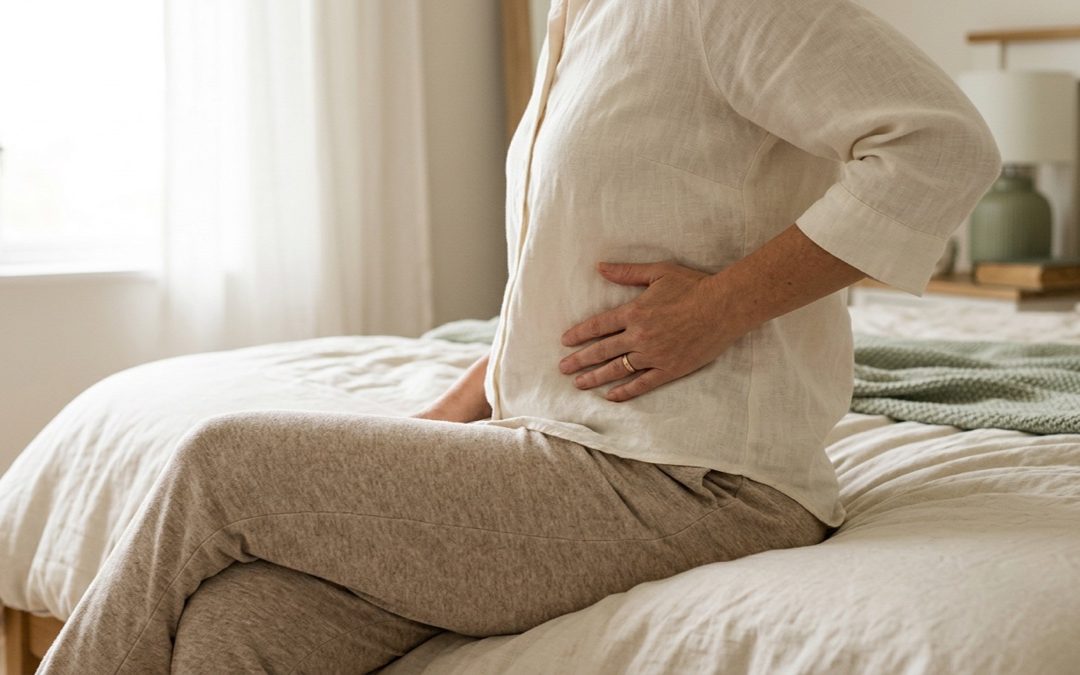
- Swelling building up just past the edges: ankles, knees, lower belly or upper back
- Blisters, raw skin or sores where seams, hooks or zippers press
- Trouble taking a full breath, or feeling faint when you stand up
- Pain that is clearly worse with the garment on than off
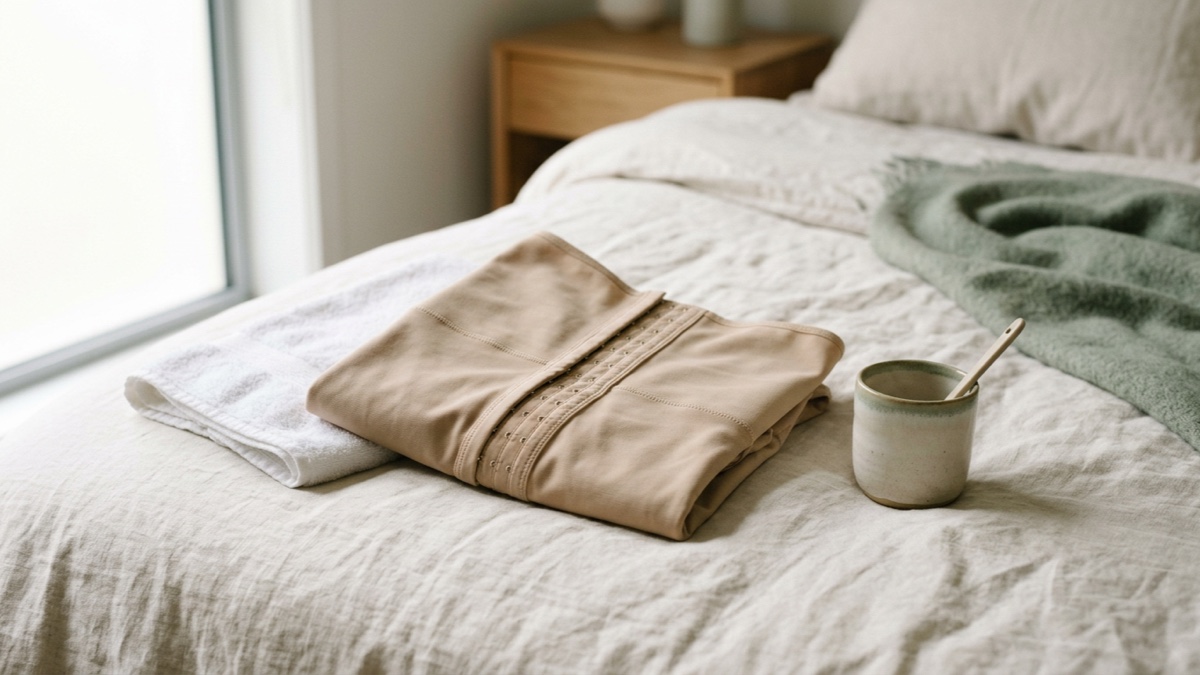
A garment that fits well presses evenly, lies flat without rolling or folding, and lets you breathe and walk normally.
Does Compression Change After the First Weeks?
Usually. Many surgeons move patients from a first-stage garment to a second-stage one as swelling goes down. Going down a size should follow your measurements, not a wish for more squeeze. A garment holds tissue in place. It doesn’t shape it further by being tighter.
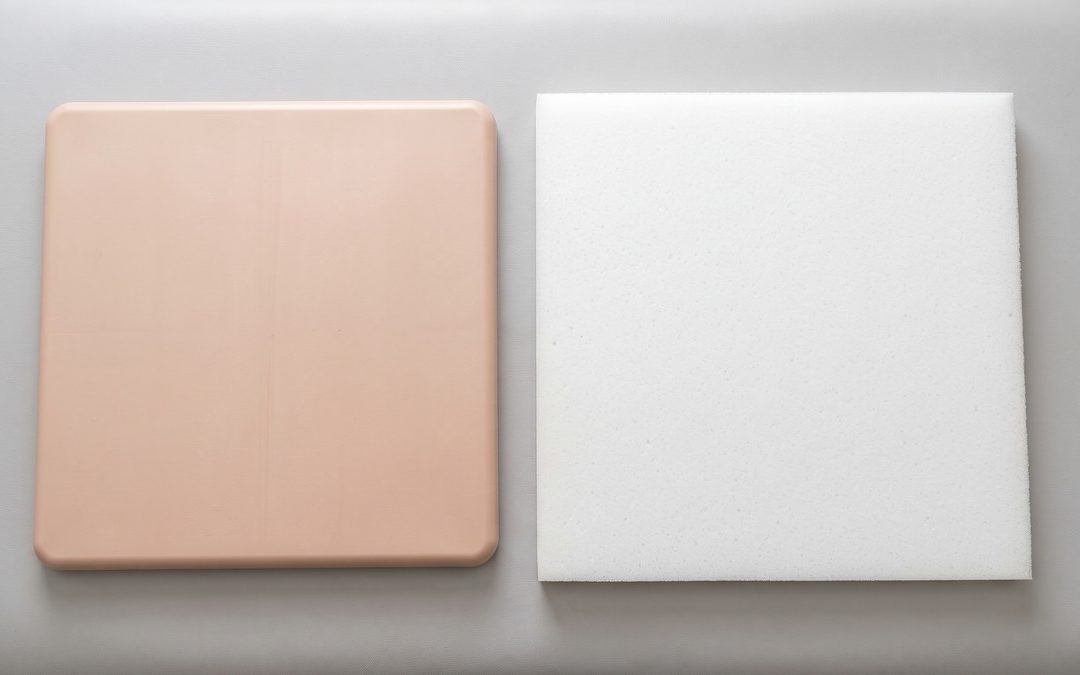
Foam pads and boards have their own uses and timing, covered in lipo foam vs ab board and swelling after a tummy tuck.
Don’t double up garments or switch to a smaller size on your own. Ask your surgeon first. A garment that folds or creases in the same spot can also leave dents, which we cover in fibrosis after lipo.
When to Call Your Surgeon
- One leg suddenly more swollen than the other, or pain or warmth in the calf
- Skin under the garment turning dark, blistering or breaking open
- Numbness that doesn’t go away after you loosen the garment
- A soft pocket of fluid that sloshes or keeps growing
Chest pain or sudden shortness of breath is an emergency. Call 911.
Don’t stop wearing a prescribed garment without asking. Ask whether it can be adjusted or resized instead.
Post-Operative Recovery Care in Houston
Our post-op recovery program includes help with your surgical garment, alongside manual lymphatic drainage that is light and never forced. It’s led by Carolina Pintos, CLT, a certified lymphedema therapist trained in Brazil, and follows your surgeon’s instructions. For why forcing fluid out does more harm than good, see the risks of incisional drainage massages.
We see clients at our Memorial (Energy Corridor) and The Woodlands clinics. Call 713-474-4774 or book your post-op session.
Frequently Asked Questions
How tight should a faja be after lipo?
Snug and even, with no pain, numbness or color change, and no swelling building up past the edges. You should be able to breathe deeply and walk normally.
How long do I need to wear compression after a tummy tuck?
Your surgeon decides. In the 2023 trial above, wearing a garment didn’t reduce swelling compared with wearing none, but that is one small study and not a reason to stop on your own.
Can a compression garment cause swelling?
It can cause swelling below its edges if it’s too tight or rolls into a band. Tell your surgeon if your ankles, knees or lower belly swell more than the treated area.
Should I size down to get more compression?
Only when your measurements have changed and your surgeon agrees. Smaller isn’t better if it digs in.
References
- Fontes de Moraes BZ, Ferreira LM, Martins MRC, Rostom L, Castro HAS, Nahas FX. Do compression garments prevent subcutaneous edema after abdominoplasty? Aesthetic Surgery Journal. 2023;43(3):329-336. Available here
- Rodrigues MA, Nahas FX, Gomes HC, Ferreira LM. Ventilatory function and intra-abdominal pressure in patients who underwent abdominoplasty with plication of the external oblique aponeurosis. Aesthetic Plastic Surgery. 2013;37(5):993-999. Available here
- Berjeaut RH, Nahas FX, Dos Santos LKIL, Filho JDP, Ferreira LM. Does the use of compression garments increase venous stasis in the common femoral vein? Plastic and Reconstructive Surgery. 2015;135(1):85e-91e. Available here
- Arkoubi AY. Effect of compression garments on post-abdominoplasty outcomes: a systematic review of the current evidence. JPRAS Open. 2024;41:128-137. Available here
This article is general information, not medical advice. Always follow your surgeon’s or doctor’s instructions for your own care.
This writing is the original and exclusive property of Carolina Pintos and is protected under copyright law. Unauthorized use of the same without the express consent of Carolina Pintos will be subject to prosecution under applicable laws.