
Most tummy tuck recovery timelines online describe how you will feel. This one describes what you can do, because that is the question people actually have at nine at night on day five.
Two honest caveats before the calendar. First, your surgeon’s protocol overrides everything below; techniques differ enough that two people with the same operation name can get different instructions, and theirs is the one that accounts for your closure. Second, these are typical ranges, not guarantees. Someone with muscle repair, drains and a combined procedure runs a slower calendar than someone with a mini abdominoplasty, and that is normal rather than a sign something is wrong.
Days 0 to 3: horizontal, bent, and mostly asleep
You are resting in a flexed position with your knees bent, which keeps tension off the abdominal closure. You are walking to the bathroom and back, short and often, starting the day of surgery or the morning after. That early walking is not optional politeness; it is the main thing standing between you and a clot.
You are not driving, not lifting anything heavier than a glass of water, and not alone if it can be avoided. If drains are in, you are logging output and stripping them as instructed.
Days 4 to 7: the corner
Most people turn a corner here. Narcotic pain medication usually steps down. You are up more often and walking further, still bent slightly forward. Showering is typically permitted once your surgeon clears it, which depends on your dressings and drains, not on the calendar.
Many surgeons remove drains somewhere in this window or the next, driven by daily output rather than by a fixed day. Do not benchmark yourself against someone whose drains came out on day four.
Week 2: upright, and the danger of feeling good
Most people begin straightening up during week two and are close to fully upright by its end. Many return to desk work around days 10 to 14, and a lot of people are cleared to drive once they are off narcotics and can brake hard without hesitating, which is the actual test.
This is also when swelling frequently peaks rather than recedes, which catches people off guard. That pattern is expected, and we cover it in detail in what normal swelling looks like after a tummy tuck.
Still off limits: lifting, children, pets, groceries, gym, and anything that makes you brace your abdomen.
Week 3: normal-looking, not normal-healing
You look fine in clothes. You feel reasonably capable. Internally you are roughly three weeks into a repair that takes months. Most setbacks we see in Houston happen in weeks two through four, and almost none of them involve people who did something dramatic. They involve a long errand, a toddler lifted once, or a full day back at work without sitting down.
Walking distance can increase. Resistance, bracing and overhead reaching should not.
Weeks 4 to 6: clearance territory
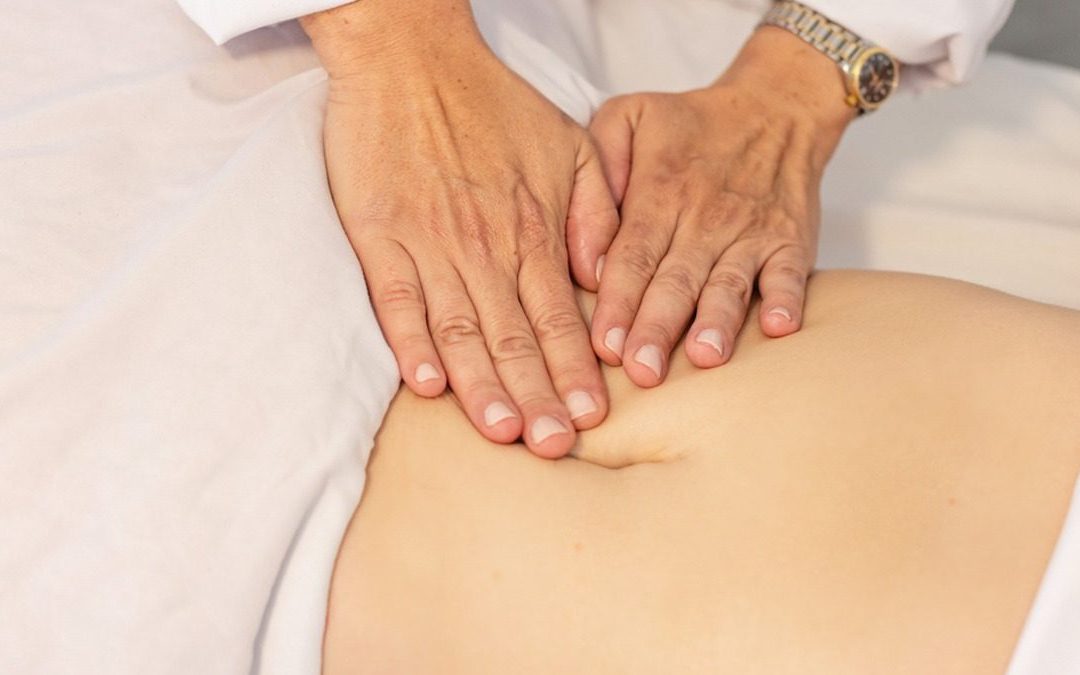
This is where most surgeons begin lifting restrictions in stages: light cardio first, then gradual increases in weight, with core work last and latest. It is also the window in which many surgeons clear hands-on post-operative work, which is why lymphatic massage after a tummy tuck should be scheduled against your clearance rather than a date you picked in advance.
Firm, ropey or uneven areas commonly appear now as tissue reorganizes. Most soften. Some, such as dog ears at the ends of the incision, are structural and are a surgical conversation rather than a massage one.
Weeks 6 to 12: back to your life
Most people are cleared for full activity somewhere in this range and are back to their usual exercise, building up rather than resuming where they left off. Scars are in their red, raised, obvious phase. Swelling is clearly better and clearly not finished.
One useful piece of evidence about compression here. Bruno and Saccoccio randomized 120 abdominoplasty-with-diastasis-repair patients in Aesthetic Plastic Surgery in 2026 to one, three or five months of class-II compression. At six months the change in inter-recti distance was nearly identical across groups, at 1.2, 1.3 and 1.4 mm. The one-month protocol was non-inferior, and the one-month group regained trunk strength and function sooner, while longer compression was associated with slower edema resolution and higher intra-abdominal pressure in months one to three. Longer is not automatically better. Your surgeon still decides your protocol, but that is worth raising with them rather than assuming more is safer.
Months 3 to 6: when strength actually comes back
This is the part that almost no recovery timeline covers honestly, and there is now decent data on it.
Bruno, Calicchia and Schirosi followed 50 women with moderate to severe diastasis recti through abdominoplasty with rectus sheath plication, publishing in Aesthetic Plastic Surgery in 2026. They measured core strength on isokinetic dynamometry at baseline, one month and six months. Mean core strength went from 182 N before surgery to 256 N at six months. Inter-rectus distance went from 3.4 cm to 0.8 cm, and patient-reported outcome scores rose from 56.2 to 82.7, both highly significant. Seroma occurred in 6 percent, with no major complications.
The number worth holding onto is the timeline, not the newton figure. Meaningful strength gains were measured at six months, not at six weeks. If you are three months out and your core feels weaker than it did before surgery, you are on schedule, not behind it.
Months 6 to 12: the finish line moves slowly
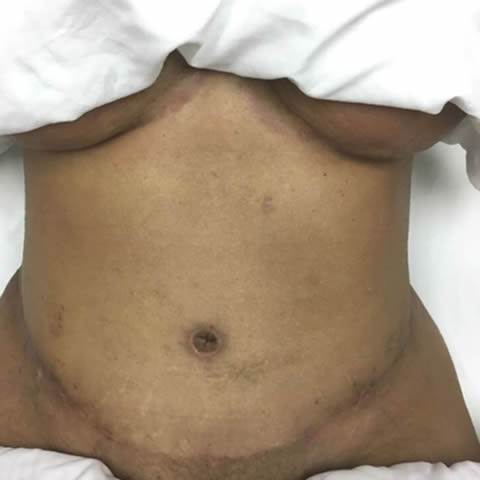
Residual swelling resolves. Scars flatten and fade, a process that continues past the one-year mark. Numbness across the lower abdomen improves gradually and sometimes incompletely. Final contour is generally judged between six and twelve months.
Three things that legitimately change your calendar
Muscle repair. Rectus plication puts the abdominal wall under tension and is the single biggest reason one person’s timeline is longer than another’s.
Drains and closure technique. Seroma is the complication surgeons design around, and the technique they chose affects both your drain time and your risk. A 2024 systematic review and meta-analysis by Liao and colleagues in Aesthetic Surgery Journal Open Forum pooled 20 studies and 1,205 patients and found progressive-tension and quilting sutures had the most robust evidence for reducing seroma, with a pooled risk ratio of 0.33 for alternative techniques versus a standard two-drain approach.
Combined procedures. If breast surgery was done at the same time, the abdomen still sets the pace. A 2026 meta-analysis by Skorochod and Wolf covering eight studies and 138,020 patients found the combined operation carried a complication profile comparable to abdominoplasty alone but elevated relative to breast surgery alone. Our mommy makeover recovery timeline goes through what that means in practice.
What should prompt a call
Sudden one-sided swelling after steady improvement, a pocket that feels like it holds liquid, spreading redness or warmth, fever, incision drainage that changes color or smell, or pain that escalates rather than settles all warrant a call to your surgeon’s office rather than a massage appointment. Calf pain or swelling, chest pain or shortness of breath are emergencies; go to an emergency room.
Post-operative recovery care in Houston and The Woodlands
Carolina Pintos is a licensed massage therapist and certified lymphedema therapist whose practice is built around post-surgical recovery, with rooms in Memorial and in The Woodlands. Sessions are timed to your surgeon’s clearance and your actual stage of healing rather than sold as a fixed package, and the work should never hurt: drainage that hurts is not drainage that is working.
References
- Bruno A, Calicchia A, Schirosi M. Restoring core strength after rectus diastasis repair: a prospective controlled study of abdominal muscle function following abdominoplasty. Aesthetic Plast Surg. 2026;50(6):2277-2286.
- Bruno A, Saccoccio V. Is longer better? Revisiting compression duration after abdominoplasty with diastasis repair. Aesthetic Plast Surg. 2026;50(7):2633-2646.
- Liao CD, Zhao K, Nikkhahmashineh N, Bui DT. Decreasing seroma incidence following abdominoplasty: a systematic review and meta-analysis of high-quality evidence. Aesthet Surg J Open Forum. 2024;6:ojae016.
- Skorochod R, Wolf Y. Risk of concomitant abdominoplasty and breast surgery versus isolated procedures: a systematic review and meta-analysis. Aesthetic Plast Surg. 2026;50(13):5013-5022.
This article is general education, not medical advice. It does not establish a therapist-patient relationship and it does not replace the instructions of the surgeon who performed your procedure. Always follow your surgeon’s protocol and contact their office with any concern about your recovery.
This writing is the original and exclusive property of Carolina Pintos and is protected under copyright law. Unauthorized use of the same without the express consent of Carolina Pintos will be subject to prosecution under applicable laws.