
Swelling is the single thing our post-surgical clients in Houston ask about most, and it is almost always the same question in different words: is this normal, or is something wrong?
The honest answer is that swelling after abdominoplasty has a recognizable shape. Once you know the shape, most of the panic goes away, and the handful of patterns that genuinely need a phone call become much easier to spot.
One caution before anything else. Nothing here replaces the instructions of the surgeon who operated on you. If your protocol differs from what you read here, follow your surgeon.
The normal shape of the curve
Swelling after a tummy tuck is not a straight line down. It is closer to a hill.
- Week 1. Swelling is significant and is mostly surgical fluid and inflammation. Your abdomen feels tight and foreign. This is not your result.
- Weeks 2 to 3. This is the part nobody warns people about: swelling commonly peaks here, not in week one. You are moving more, you are upright longer, and fluid follows gravity. Many people become convinced something has gone wrong during this stretch, and for most of them nothing has.
- Weeks 4 to 6. Steady, slow improvement. Firm or ropey areas often appear in the lower abdomen and flanks as tissue reorganizes.
- Months 2 to 3. The stubborn phase. Mornings look reasonably good and evenings look swollen again. Circumference stops changing much week to week.
- Months 3 to 12. The last of it resolves slowly. Final contour is generally judged between six and twelve months.
If you want the same information organized around activity rather than fluid, our mommy makeover recovery timeline covers what you can safely do at each stage, including the combined-procedure case.
Normal patterns that frighten people unnecessarily
Worse at night than in the morning. Expected. You have spent the day upright and fluid has collected in the lowest tissue. The morning measurement is the honest one.
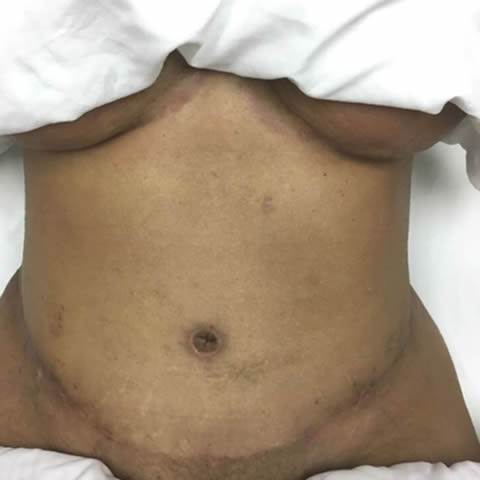
A firm shelf or roll just above the incision. Very common in the first months as tissue and fluid settle against the closure line.
Pubic swelling. Frequently surprising, frequently pronounced, and usually temporary. The area sits below the incision and drains poorly at first.
Slightly more swelling on one side. Common, particularly if you favor one side when sleeping or getting up. Gradual, mild and stable is reassuring.
A setback after a busy day. A long shopping trip or a full day back at work can visibly undo several days of progress. It is temporary, but it is also information about your pace.
What the research actually says about compression
Most people are told to wear a garment and assume the longer the better. Two randomized controlled trials complicate that assumption, and they are worth knowing about.
Fontes de Moraes and colleagues, writing in Aesthetic Surgery Journal in 2023, randomized 32 women after abdominoplasty to wear a compression garment or to wear none. After post-operative day 35, the group without a garment had significantly lower waist circumference than the group wearing one (P < .001).
Bruno and Saccoccio went further. In a 2026 randomized trial in Aesthetic Plastic Surgery, 120 patients who had abdominoplasty with diastasis repair were assigned to one, three, or five months of standardized class-II compression. At six months, the change in inter-recti distance was essentially identical across the three groups: 1.2 mm, 1.3 mm and 1.4 mm respectively. The one-month protocol was non-inferior. Longer compression was associated with slower resolution of edema, reduced venous flow and higher intra-abdominal pressure during months one through three, and the one-month group regained trunk strength and function sooner. Complication rates were comparable.
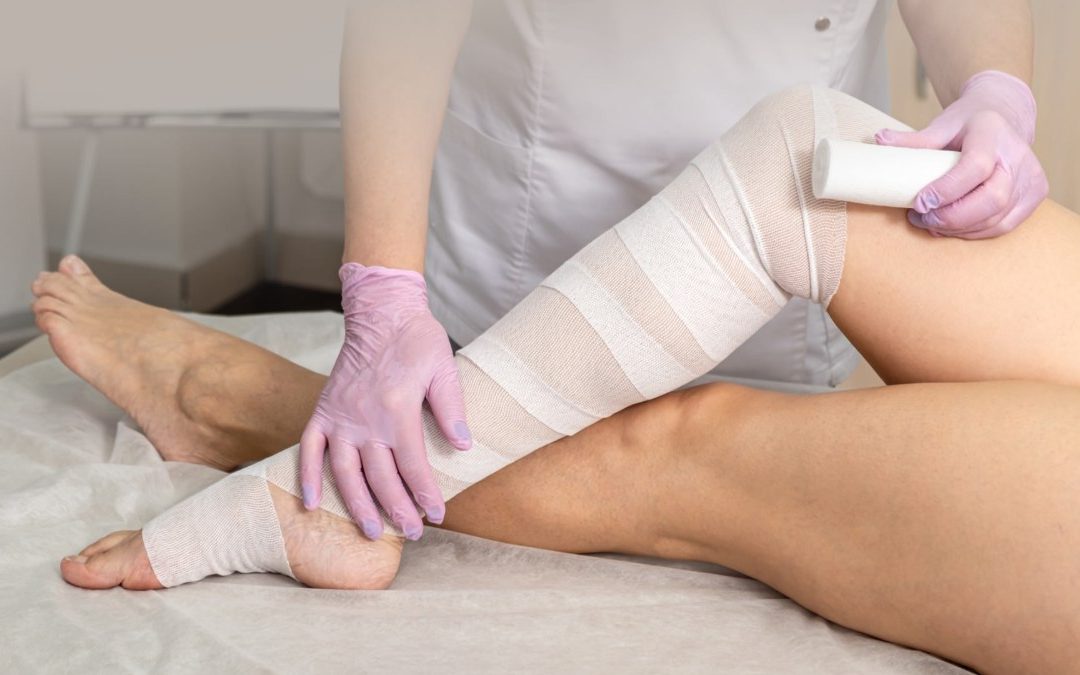
Read that carefully, because it is easy to misread. This is not an argument for taking your garment off. Your surgeon prescribed it for skin redraping and seroma risk as much as for swelling, and there is a real difference between a trial protocol and your individual closure. What the evidence does say is that more compression, for longer, is not automatically better, and that a garment which leaves deep grooves, rolls at the waist, or bites into the groin can restrict the drainage it is supposed to assist. Fit and pressure class matter more than hours logged. If yours is digging in, call your surgeon’s office rather than quietly enduring it.
Where manual lymphatic drainage fits
We perform this work daily, which is exactly why we would rather state its limits than oversell it.
Maningas and colleagues, in The American Journal of Cosmetic Surgery in 2020, followed 20 women after abdominoplasty with core liposuction. Half received manual lymphatic drainage from a certified lymphedema specialist twice weekly for three weeks starting at week six; both groups wore standard compression for eight weeks. Between weeks six and eight, the treated group’s combined waist measurements dropped by a mean of 9.8 cm against 6.6 cm in the control group. The difference favored drainage, but it was not statistically significant (P = .11). Twenty patients cannot settle the question.
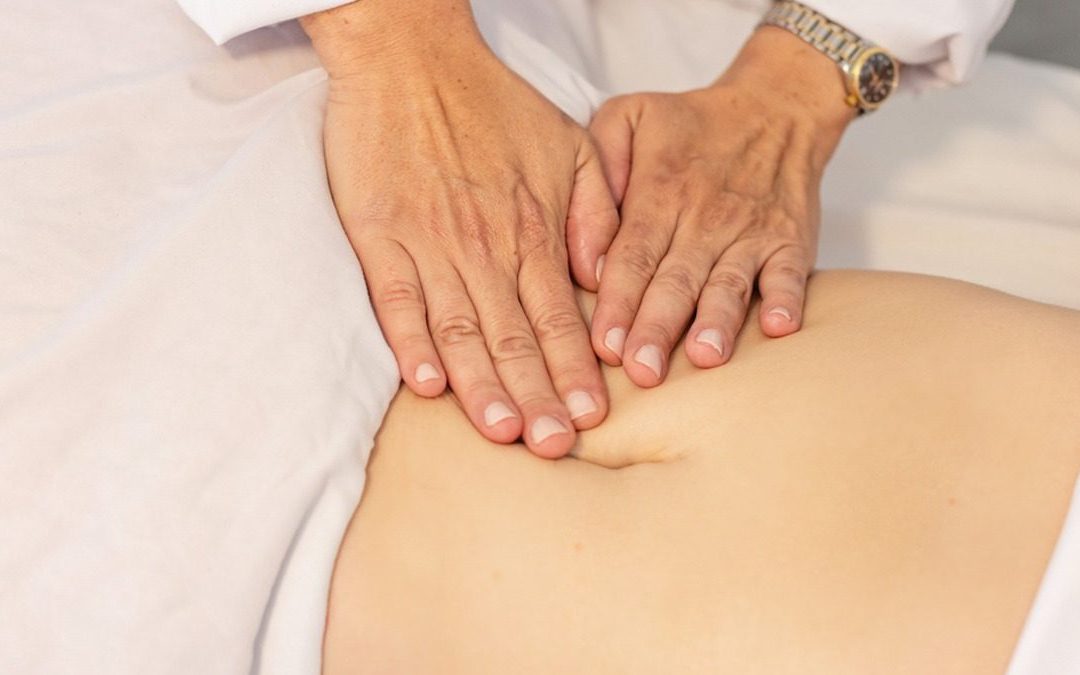
So here is the fair claim. Skilled post-surgical drainage reliably makes people more comfortable, makes early movement easier, and puts your abdomen in front of someone who sees hundreds of them and will notice a fluid collection or an infection before you do. Whether it shortens the total swelling timeline is not proven. Any clinic telling you otherwise is marketing.
It also should not hurt. Aggressive work that forces fluid does not drain faster; it inflames tissue and can set you back.
Swelling that is not normal
Call your surgeon’s office, not your therapist, for any of the following:
- A sudden, one-sided increase after a period of steady improvement, especially if the area feels like it holds liquid or shifts when you move. That pattern suggests a seroma. It is not rare: a 2024 systematic review and meta-analysis by Liao and colleagues in Aesthetic Surgery Journal Open Forum pooled 20 studies and 1,205 patients specifically because seroma remains the most common complication surgeons are trying to design around.
- Spreading redness, increasing warmth, or fever. Swelling that comes with heat and color change is a different problem from swelling alone.
- Incision drainage that changes color or develops an odor.
- Pain that is escalating rather than gradually settling.
- Skin that is dusky, dark, or breaking down near the incision.
Swelling or pain in one calf, chest pain, or shortness of breath are emergencies and may indicate a clot. Go to an emergency room. Do not wait for an office to open and do not book a massage.
What genuinely helps in the meantime
Short, frequent walking beats long walks. Elevating your legs when you sit does more than most people expect. Sleeping in the position your surgeon specified, usually with knees bent, keeps tension off the repair. Hydration matters, and salt genuinely shows up in the evening measurement. Measure in the morning and only once a week, because daily measuring at night will make you miserable for no clinical reason.
And avoid heat. Heating pads, hot tubs, saunas and hot stones increase local blood flow and swelling in tissue that is already inflamed, which is why heat is the wrong tool after body contouring surgery.
Post-surgical care in Houston and The Woodlands
Carolina Pintos is a licensed massage therapist and certified lymphedema therapist whose practice is built around post-operative recovery, with rooms in Memorial and in The Woodlands. Sessions are scheduled to your surgeon’s clearance and your actual stage of healing, and part of what you are paying for is a trained pair of eyes on your abdomen every week.
If you are not sure whether what you are seeing is expected, bringing it to a session is a reasonable use of one.
For the activity side of the calendar, see tummy tuck recovery week by week.
References
- Fontes de Moraes BZ, Ferreira LM, Martins MRC, Rostom L, Castro HAS, Nahas FX. Do compression garments prevent subcutaneous edema after abdominoplasty? Aesthet Surg J. 2023;43(3):329-336.
- Bruno A, Saccoccio V. Is longer better? Revisiting compression duration after abdominoplasty with diastasis repair. Aesthetic Plast Surg. 2026;50(7):2633-2646.
- Maningas T, Sturm L, Mangler A, Pazdernik VK. Manual lymphatic drainage in postoperative abdominoplasty with core liposuction patients. Am J Cosmet Surg. 2020;37(1):45-49.
- Liao CD, Zhao K, Nikkhahmashineh N, Bui DT. Decreasing seroma incidence following abdominoplasty: a systematic review and meta-analysis of high-quality evidence. Aesthet Surg J Open Forum. 2024;6:ojae016.
This article is general education, not medical advice. It does not establish a therapist-patient relationship and it does not replace the instructions of the surgeon who performed your procedure. Always follow your surgeon’s protocol and contact their office with any concern about your recovery.
This writing is the original and exclusive property of Carolina Pintos and is protected under copyright law. Unauthorized use of the same without the express consent of Carolina Pintos will be subject to prosecution under applicable laws.