You take your shoes off at the end of the day and there is a sock line pressed into your ankle. Your rings are tighter than they were this morning. Your shoes fit at 8am and do not at 6pm.
For most people, most of the time, that is gravity doing what gravity does. But swelling is also one of the ways serious conditions announce themselves, and the difference is usually in the pattern rather than the amount.
So we are going to do this in the sensible order: the patterns that need a doctor first, then the everyday causes, then what actually helps.
Read this part first: when to seek care today
Seek medical care the same day if you have any of the following.
- Swelling in one leg only, coming on over hours or days, especially with pain, warmth or redness in the calf. New one-sided leg swelling is the presentation of a deep vein clot until a clinician says otherwise.
- Chest pain or shortness of breath alongside leg swelling. Go to an emergency room. Do not drive yourself.
- Breathlessness lying flat, or waking at night short of breath.
- Spreading redness, heat or fever in a swollen limb.
- Swelling that appears suddenly with no change in your routine, or that keeps worsening week on week.
- Skin that is breaking down, weeping or ulcerating.
Two other groups should get assessed rather than self-manage: anyone who is pregnant with new or rapidly increasing swelling, and anyone with known heart, liver or kidney disease.
Nobody should be doing lymphatic massage instead of that appointment.
One leg or two? The distinction does most of the work
In a 2022 clinical review in American Family Physician, Patel and colleagues set out the framework clinicians use, and it is simple enough to be useful at home.
One-sided swelling generally points to something local: a clot, an infection, an injury, or chronic venous insufficiency in that leg.
Both legs swelling together more often reflects something systemic or situational: heart failure, liver or kidney disease, obstructive sleep apnea, medication effects, or simply the ordinary gravitational swelling that most people get.
That is why the first question anyone should ask is not “how swollen” but “one or both, and since when.”
The everyday causes
Gravity, and a lot of it. Blood and tissue fluid pool in whatever part of you is lowest. Eight hours upright is eight hours of fluid working downhill. This is why swelling is typically worse in the evening and largely gone by morning, and why the morning measurement is the honest one.
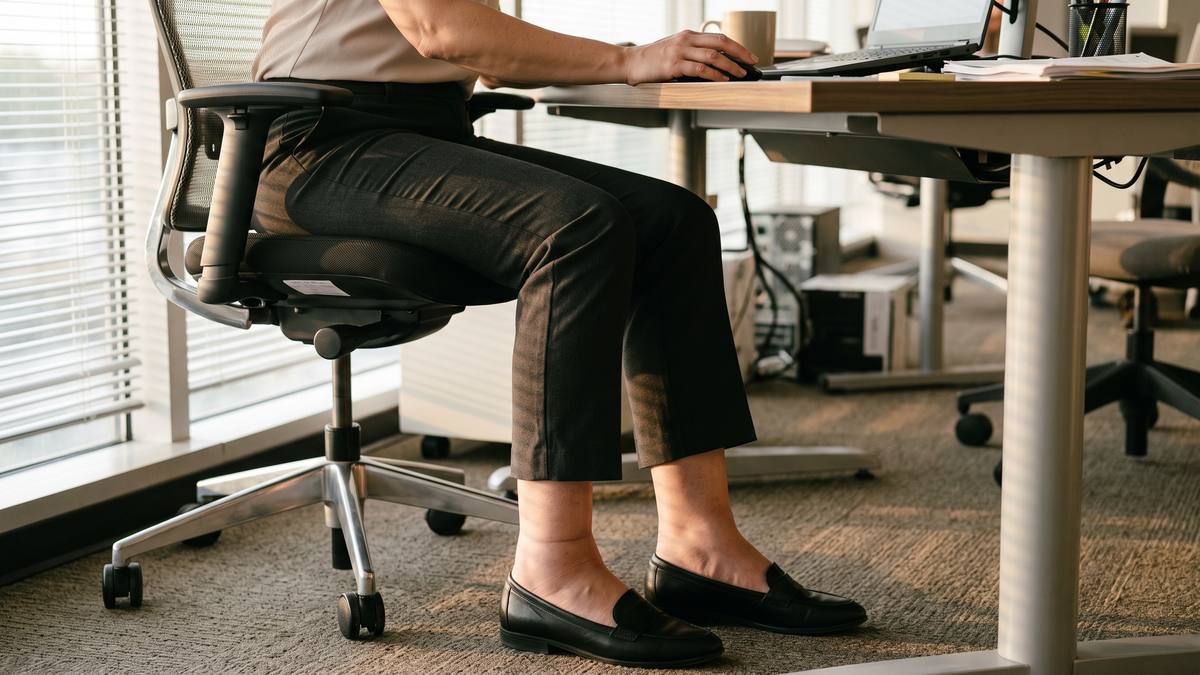
Sitting still all day. The calf muscle is the pump that pushes venous blood back up the leg, and it only works when it contracts. A full day at a desk without walking is a full day with the pump switched off. The swelling tends to show at the ankle first.
Standing all day. The opposite job, the same result, by a different route. Hairdressers, nurses, teachers, retail staff and surgeons all know this one.
Travel. A long flight or drive combines immobility, a cramped position and low cabin humidity. Ankles at the end of a transatlantic flight are normal. Ankles still swollen three days later, or one ankle far worse than the other, are not, and belong in the section above.
Heat. Houston in August is its own risk factor. Blood vessels dilate in heat, and more fluid moves into the tissue. Swelling that is markedly seasonal is usually this.
Salt. Sodium pulls water with it. A single high-salt meal can be visible the next morning. This is also why the scale can jump two pounds overnight without anything meaningful having happened.
Medications. This one is under-recognised and worth raising with your prescriber rather than living with. The AAFP review names calcium channel blockers, NSAIDs, corticosteroids and estrogen-containing medications among common culprits, and notes that switching or stopping the drug often resolves the swelling. Do not stop a prescribed medication on your own.
Hormones, the menstrual cycle and perimenopause
Cyclical fluid retention in the days before a period is familiar to most women and is not a disease.
Perimenopause is where it gets confusing. Fluctuating estrogen, changing sleep, weight redistribution and rising heat sensitivity can all show up as a body that holds more fluid than it used to, on no clear schedule. Many women describe it as feeling puffy rather than swollen, and describe rings and waistbands as the first things to notice.
This is real, and it is also the point at which we want to be careful. “Hormonal” is a comfortable explanation that can quietly absorb symptoms that deserve investigating, particularly when swelling is new, one-sided or progressive. If your swelling changed and stayed changed, get it looked at before filing it under hormones.
What actually helps
Elevation. Above the level of your heart, not just up on a footstool. Twenty minutes does more than most people expect, and it is free.
Movement, in small frequent doses. Getting up for two minutes every hour beats one long walk at the end of the day. Ankle pumps under a desk work when standing up is not an option.
Graduated compression. The AAFP review’s first-line recommendation for chronic lower-limb swelling is graduated compression stockings at 20 to 40 mm Hg, alongside elevation, exercise and skin care. Fit and grade matter, and compression is not appropriate for everyone, so this is a conversation with a clinician rather than an online purchase.
Salt awareness rather than a salt-free diet. Most of the sodium in a typical diet is in packaged and restaurant food, not the salt shaker.
Skin care. Swollen skin is stretched, dry and more prone to cracking and infection. Moisturise daily and treat any break in the skin seriously.
Where lymphatic drainage fits, honestly
This is our work, so we would rather state its limits than oversell it.
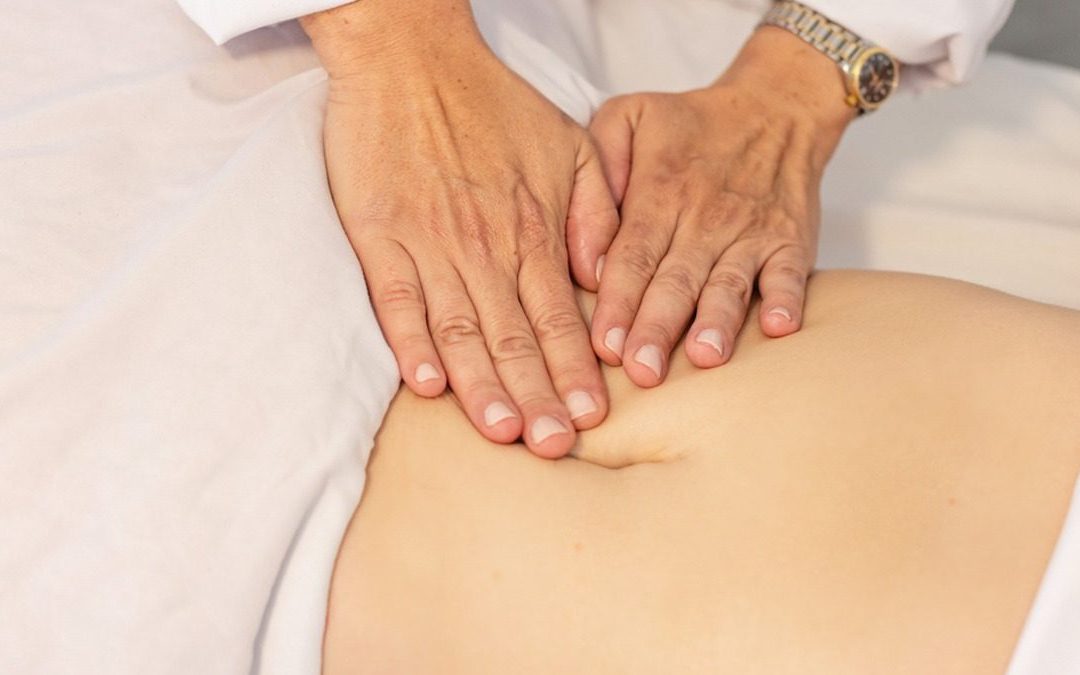
Manual lymphatic drainage is a recognised part of managing lymphedema, which is a distinct, chronic condition of the lymphatic system, and it has a well-established role in recovery after surgery. Those are the settings with the strongest case.
For ordinary end-of-day swelling in otherwise healthy legs, it is comfortable, people generally feel lighter afterwards, and the effect is temporary. It is not a treatment for heart, liver or kidney disease, and it will not fix a problem whose cause is a medication or a diagnosis. Anyone offering it as a cure for swelling in general is overstating what it does.
It should also never hurt. Aggressive work does not move more fluid; it inflames tissue.
When it might be lymphedema or lipedema
Two conditions get missed for years because they are mistaken for ordinary swelling or for weight.
Lymphedema tends to be persistent rather than daily, often begins in one limb, and does not fully resolve overnight. It can follow lymph node surgery or radiation, sometimes years later.
Lipedema is a symmetrical, disproportionate accumulation of tissue in the legs that is typically tender to touch and characteristically spares the feet, which is one of the clearest ways to tell it apart from ordinary swelling.
Both deserve a proper diagnosis rather than a guess, ours included.
Seeing someone in Houston or The Woodlands
Carolina Pintos is a licensed massage therapist and certified lymphedema therapist with rooms in Memorial and in The Woodlands. If your swelling has not been assessed by a physician, that is the right first step, and we will say so.
If it has, and you are looking for someone who works with swelling every day and will tell you plainly what this work can and cannot do, that is what we are for.
References
- Patel H, Skok CJ, DeMarco A. Peripheral edema: evaluation and management in primary care. Am Fam Physician. 2022;106(5):557-564.
- Fontes de Moraes BZ, Ferreira LM, Martins MRC, Rostom L, Castro HAS, Nahas FX. Do compression garments prevent subcutaneous edema after abdominoplasty? Aesthet Surg J. 2023;43(3):329-336.
This article is general education, not medical advice, and it cannot diagnose the cause of your swelling. It does not establish a therapist-patient relationship. Swelling can be a symptom of serious cardiac, liver, kidney and vascular conditions; please see a physician for assessment, and seek emergency care for the warning signs listed above.
This writing is the original and exclusive property of Carolina Pintos and is protected under copyright law. Unauthorized use of the same without the express consent of Carolina Pintos will be subject to prosecution under applicable laws.