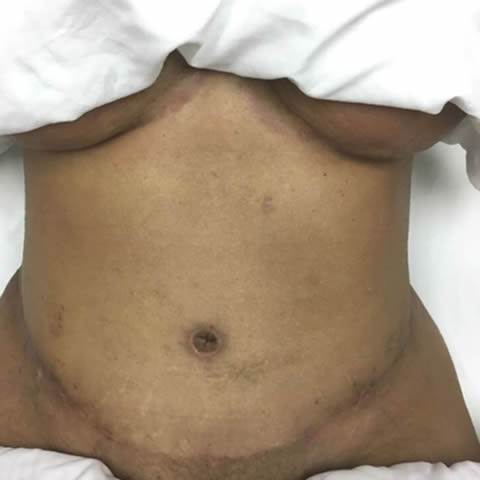
A seroma is a pocket of fluid sitting in a space under the skin. It is not the same thing as swelling, and no massage technique drains one.
If you think you have one, the person to call is your surgeon, not your therapist. This article is about how to tell whether that call is warranted.
What a Seroma Actually Is
A tummy tuck lifts the skin and fat away from the abdominal wall across a wide area. That leaves a potential space between two surfaces that used to be attached. The body fills it with serous fluid, which is straw-coloured and clear rather than blood.
Small amounts are reabsorbed without anyone noticing. When the volume outpaces reabsorption, it collects into a defined pocket, and that pocket is a seroma.
The distinction matters because a seroma is contained. Swelling is fluid spread diffusely through tissue. A seroma is fluid pooled in a cavity, and fluid in a cavity does not respond to being pushed from outside.
How to Tell a Seroma From Ordinary Swelling
Generalised post-operative swelling is firm, evenly spread, symmetrical, worse at the end of the day, and slowly improving week on week.
A seroma tends to behave differently:
- It has an edge. You can often feel where it starts and stops, rather than a gradual fade into normal tissue.
- It moves. Pressing one side can produce a wave or ripple felt on the other. Clinicians call this fluctuance, and it is the single most telling sign.
- It is often asymmetrical — one side, or one defined area, rather than the whole abdomen.
- It can appear or grow after the early swelling has already started settling, which is the pattern that should prompt a call. Swelling that is improving and then suddenly is not is worth reporting.
- It may feel tight or heavy rather than sore, and the skin over it can look stretched or shiny.
None of this is a diagnosis. Seromas are confirmed by examination and often ultrasound, and they are treated by aspiration with a needle in the surgeon’s office, sometimes more than once.
How Common Are They?
Common enough that being told you have one is not a sign anything went wrong.
A 2018 study in the Revista Brasileira de Cirurgia Plastica followed 94 classical abdominoplasty patients and found seroma in 16 of them, just over 17 per cent. The same study looked for the risk factors patients usually worry about, including body mass index, age, comorbidities and habits, and found no statistically significant relationship with any of them.
That is worth sitting with. If you develop a seroma, it is very unlikely to be because of something you did.
The Uncomfortable Part: Most of the Risk Is Decided in the Operating Room
A 2019 systematic review and meta-analysis in the same journal pooled five studies and 978 abdominoplasty patients to compare surgical approaches. The difference was large.
Where drains alone were used, seroma incidence ran between 12 and 28 per cent. Where quilting sutures, also called progressive tension or adhesion sutures, were used instead, incidence ran between 0 and 3.45 per cent. The authors concluded that quilting sutures alone were the superior technique.
Quilting sutures work by tacking the lifted skin flap down to the abdominal wall at intervals, so the potential space never exists in the first place. No space, no pocket.
This is a surgical decision, made before you wake up. It is not something massage, compression, diet or rest changes afterwards, and any recovery plan that implies otherwise is overselling itself.
What Lymphatic Drainage Can and Cannot Do
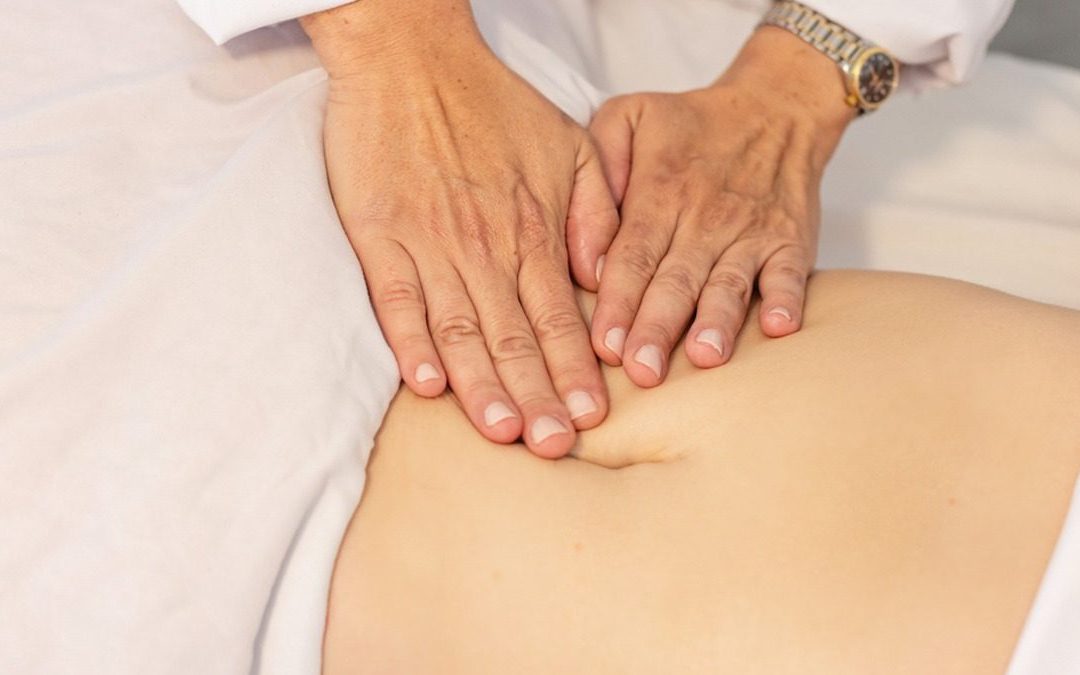
It does not drain a seroma. The fluid is in a closed pocket. Pushing on it from the outside does not empty it, and aggressive work over a seroma can irritate the cavity lining and make the situation worse rather than better.
What it does do is manage the diffuse swelling in the surrounding tissue, which is a genuinely different problem, and keep the rest of the recovery moving while the surgeon deals with the pocket.
There is one more thing a properly trained therapist does, and it may be the most valuable: notice it. We see patients two or three times a week in the weeks when seromas typically appear, which is more often than most people see their surgeon. A therapist who feels a fluctuant, well-defined collection should stop, not treat over it, and tell you to contact your surgeon that day.
A therapist who feels one and keeps working is either untrained or hoping you do not notice. Both are reasons to leave.
When to Contact Your Surgeon
Call promptly if you notice any of the following:
- A defined area of fullness that ripples or moves when pressed
- Swelling that was improving and has started increasing again
- A marked difference between one side and the other
- Clear or straw-coloured fluid leaking from the incision
Call urgently, the same day, if the area becomes hot, red, increasingly painful, or you develop a fever. Those are signs of possible infection rather than a simple seroma, and the timeline matters.
Post-Surgical Recovery in Houston and The Woodlands
Carolina Pintos Therapy provides post-operative lymphatic care, scar tissue and fibrosis treatment and in-home recovery visits at our Memorial and The Woodlands locations. We work to your surgeon’s protocol and send you back to them when something belongs in their hands.
Carolina Pintos is a licensed physical therapist trained in Brazil and Spain, with more than twenty years in post-surgical recovery. The clinic is referred by more than a hundred Houston plastic surgeons.
Related reading: lymphatic massage after a tummy tuck covers when to start and how many sessions to expect, dog ears after a tummy tuck explains another thing commonly mistaken for swelling, and why post-operative drainage should not hurt describes what correct pressure feels like.
Recovering from a combined procedure? Our mommy makeover recovery timeline explains why the abdomen, not the chest, should set your pace.
For the wider picture, see how ordinary post-tummy-tuck swelling behaves so you can tell the difference sooner.
References
- Nassif TM, Silveira FGL, Assunção LF, Garcia ERB, Sanches VM. Análise dos fatores de risco na formação de seroma em abdominoplastia clássica. Revista Brasileira de Cirurgia Plástica. 2018;33(2):156-160.
- Martinelli KG, Rezende CF, Colombo FG. Incidência de seroma em abdominoplastia com e sem uso de drenos e pontos de adesão: revisão sistemática e metanálise. Revista Brasileira de Cirurgia Plástica. 2019;34(4):546-551.
This article is general information, not medical advice, and nothing here is a substitute for examination by your surgeon. Individual results vary. If you suspect a seroma, contact your surgeon.
This writing is the original and exclusive property of Carolina Pintos and is protected under copyright law. Unauthorized use of the same without the express consent of Carolina Pintos will be subject to prosecution under applicable laws.