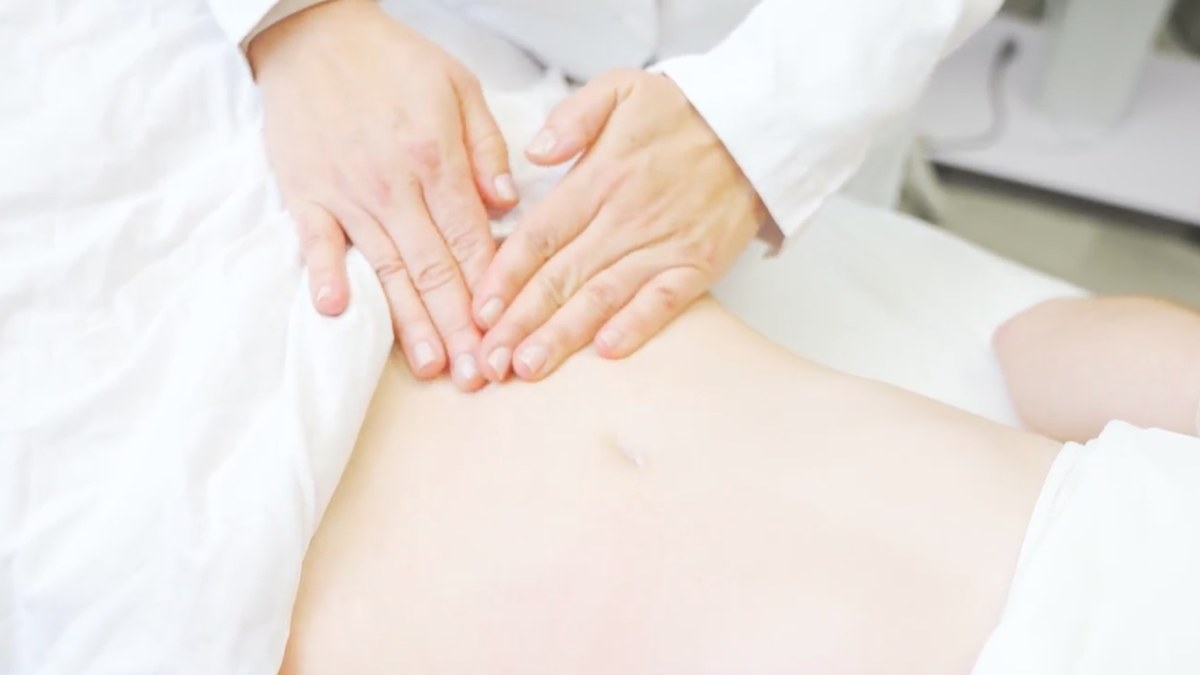
Most patients begin manual lymphatic drainage within the first week after a tummy tuck, once their surgeon clears it, and continue two to three times a week through the first month. The goal in that window is not relaxation. It is moving trapped fluid out before it has time to organize into fibrosis.
Why Swelling After Abdominoplasty Behaves Differently
A tummy tuck lifts skin and tissue away from the abdominal wall. That process interrupts some of the lymphatic pathways that normally drain fluid out of the area. Your body rebuilds them, but in the meantime fluid collects with nowhere efficient to go.
This is why swelling after abdominoplasty is not like swelling after a bruise. It does not simply fade on its own schedule. Left sitting, it can contribute to the hardened areas, lumps and tight, uneven texture that patients describe as fibrosis.
There is a further detail that matters for technique. After a tummy tuck the usual drainage routes from the lower abdomen have been cut, so the fluid cannot simply be moved to the nodes it would normally travel to. A trained therapist redirects it along alternative pathways, called anastomoses, toward the axillary nodes under the arms. Knowing which pathways were disrupted, and which remain, is the difference between treatment and guesswork.
Manual lymphatic drainage is a light, rhythmic technique that works with the remaining vessels. A 2026 review in the Brazilian Journal of Implantology and Health Sciences, looking at manual lymphatic drainage after body plastic surgery, concluded that when it is performed by trained professionals it helps control edema, reduces pain and supports the prevention of complications.
The phrase by trained professionals is doing real work in that sentence. Manual lymphatic drainage is a specific clinical technique, not a firm massage done gently.
What the Research Shows About Fibrosis
The most useful study here is a controlled trial published in the Revista Brasileira de Cirurgia Plastica, which followed women through abdominoplasty and liposuction recovery and compared a structured pre-operative, intra-operative and post-operative protocol against standard care.
The differences were substantial. Fibrosis resolved in 11.7 days in the structured group against 48.6 days with standard care. Bruising resolved in 7.8 days against 17.6. And the structured group needed fewer sessions overall, 14.6 against 23.1.
Fibrosis resolved in roughly a quarter of the time.
One honest caveat belongs here. The protocol tested was not lymphatic massage on its own. It combined pre-operative nutritional preparation, lymphatic taping applied during surgery, compression foam, manual lymphatic drainage, microcurrent and red light therapy. Those numbers belong to a whole programme of care, not to massage by itself. What the study supports is the case for structured, early, multi-part post-operative care rather than waiting to see what happens.
That is the approach we use.
The Timeline, Week by Week
Your surgeon’s instructions always take priority over anything below.
Week 1, drainage begins. Once you are cleared, usually two to three sessions. Very light work. The aim is moving fluid and getting your compression garment fitted correctly. A badly fitted garment can undo good drainage, and most patients are never shown how to check.
Weeks 2 to 4, the important window. Two to three sessions a week. This is when fluid is most mobile and most worth moving. Patients who start here generally have an easier recovery than those who wait.
Weeks 4 to 8, scar tissue work begins. Typically around three to four weeks, guided by your surgeon, the focus shifts. Alongside drainage we begin working on any fibrosis using high-speed vibration, cupping and vacuum, radio frequency and ultrasound cavitation.
Months 2 to 6, refinement. Sessions space out. The work focuses on remaining dense areas, scar mobility and evening out texture.
Please Do Not Put Heat on a Numb Abdomen
This is the warning we most wish patients heard before they needed it.
A tummy tuck disrupts the nerves supplying the skin of the lower abdomen, and thermal sensation is the slowest sensory function to return. You can be months, sometimes permanently, unable to feel heat accurately in that area, while the skin itself is perfectly capable of burning.
A 2026 case report in the Revista Brasileira de Cirurgia Plastica describes a 34-year-old woman who used a hot water bottle for menstrual pain two years after her abdominoplasty. She sustained a severe burn below the navel that she could not feel. It required surgical debridement and roughly forty days of healing. The authors note that hot water bottles hold temperatures above 50 degrees Celsius long enough to burn within minutes, and that patients with reduced sensitivity cannot reliably detect it.
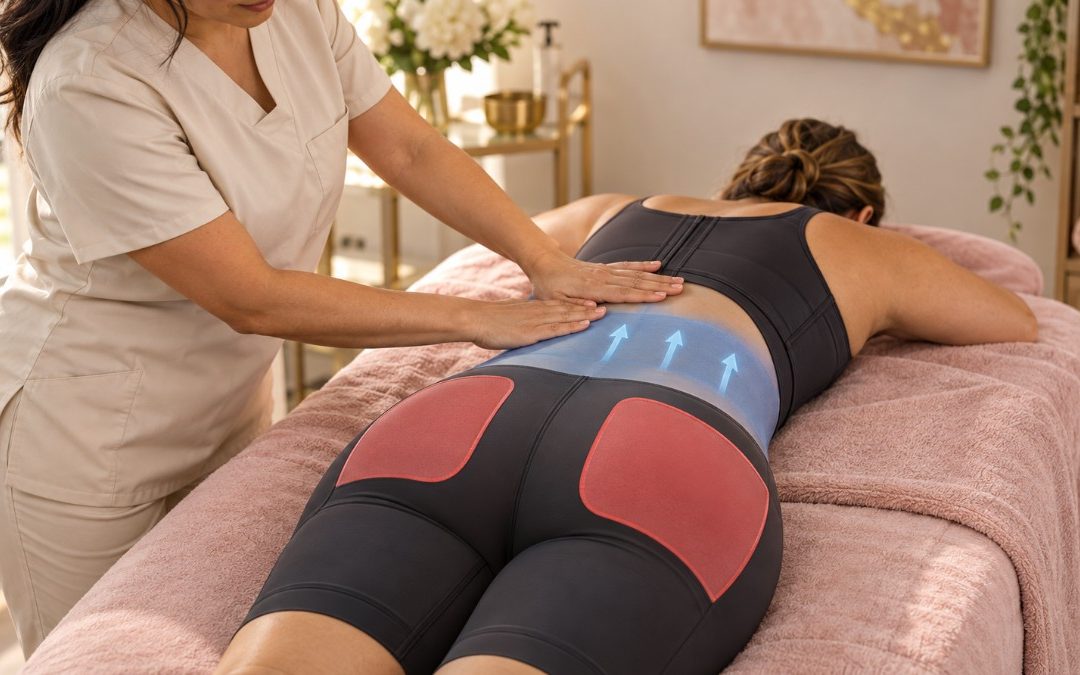
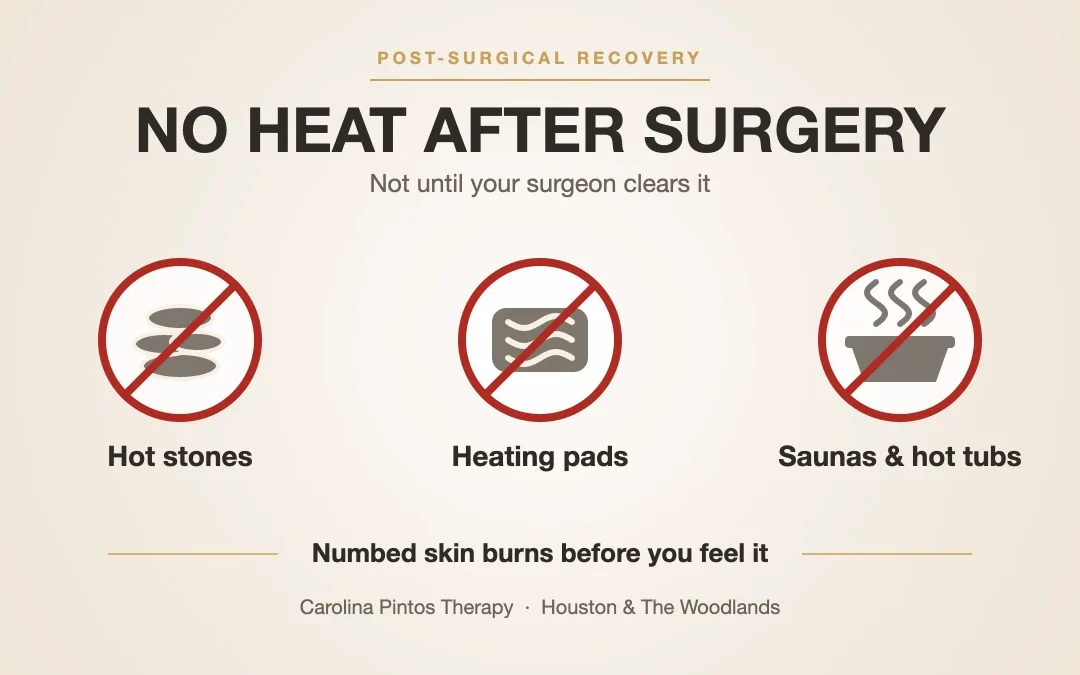
The same principle rules out hot stone treatments during recovery. Beyond the burn risk, heat during the acute inflammatory phase adds inflammation to tissue that is already inflamed. We see patients who arrive with more scar tissue than their stage of recovery would predict after exactly this kind of treatment elsewhere.
No heating pads. No hot water bottles. No hot stones. If something feels tight or sore, that is a reason to be assessed, not to apply heat.
How Many Sessions Will You Actually Need?
There is no single number, and anyone who quotes you one before seeing you is guessing. It depends on how extensive your surgery was, whether liposuction was combined with it, how your tissue responds, and how early you started.
What the Brazilian trial suggests is that structured early care needed roughly a third fewer sessions than standard care to reach the same point. Starting properly tends to cost less overall than starting late.
Signs You Should Be Seen Sooner
Contact your surgeon, not your massage therapist, if you notice a rapidly enlarging soft swelling that feels like fluid moving under the skin, increasing redness or warmth, fever, or pain that is getting worse rather than better. These need a surgeon’s assessment.
Lymphatic Massage After a Tummy Tuck in Houston
Carolina Pintos Therapy offers post-operative lymphatic care, scar tissue and fibrosis treatment and in-home recovery visits at both Memorial and The Woodlands locations.
Carolina Pintos is a licensed physical therapist trained in Brazil and Spain, and the clinic is referred by more than a hundred Houston plastic surgeons. If you are still in your first weeks and travelling is painful, ask about in-home sessions when you book.
Carolina discussed post-surgical lymphatic recovery in depth with Houston plastic surgeon Dr. Rolando Morales on the Fit Doc Podcast, Episode 16, in August 2026, including compression, timing, and the treatments to avoid after body contouring surgery.
References
- Sousa BKB, Santos HP. Os efeitos da drenagem linfatica manual no pos-operatorio de cirurgias plasticas corporais. Brazilian Journal of Implantology and Health Sciences. 2026;8(5):1058-1072.
- Chi A, Lange A, Guimaraes MVTN, Santos CB. Prevencao e tratamento de equimose, edema e fibrose no pre, trans e pos-operatorio de cirurgias plasticas. Revista Brasileira de Cirurgia Plastica. 2018;33(3):343-354.
- Bruno A, Foti R, Cilluffo M. Burn Risks in Postabdominoplasty Patients: A Case Report. Revista Brasileira de Cirurgia Plastica. 2026;41(1):1-7.
- Fit Doc Podcast, Episode 16. Dr. Rolando Morales and Carolina Pintos on the lymphatic system. August 2026.
This article is general information, not medical advice. Always follow your surgeon’s instructions for your own recovery.
This writing is the original and exclusive property of Carolina Pintos and is protected under copyright law. Unauthorized use of the same without the express consent of Carolina Pintos will be subject to prosecution under applicable laws.